
Mobile App Development Trends Shaping the Digital World in 2026
Introduction
The client who is checking the delivery status, scheduling an appointment, shopping for products, or watching a video clip is very likely doing this using their mobile phone. This everyday activity has shifted the role of mobile application development in business. Instead of just having a company presence on a mobile phone, Mobile App Development today is all about developing a digital touch point which makes the customer’s next move easier.
In 2026, the discussion goes far beyond good design and simple functionality. The companies are now considering such elements as artificial intelligence, personalization, privacy, speed, analytics, and integration between applications, website and marketing channels. The question is not “What features can we add?” but “What will make customers return?”
1. AI Is Becoming a Practical App Feature
The use of artificial intelligence is being incorporated into regular customer journeys. An online shopping site can suggest products according to browsing behavior. A service business can use an intelligent assistant to answer routine questions. A learning platform can suggest content based on a user’s progress.
The value of Mobile App Development comes from solving a genuine business problem. A better approach is to identify repetitive tasks and customer frustrations that automation can reduce.
2. Apps Will Become More Relevant Thanks to Personalization
Users Do Not Want To Look For The Same Information in the Same Menus Every Time. They Want To See Something Relevant.
Modern Mobile App Development can support personalised recommendations, saved preferences, location-aware information and behaviour-based experiences. For example, a restaurant app could highlight previous orders, while a travel application could organise information around an upcoming trip.
Personalisation should still respect privacy. Businesses should explain data use clearly and give users sensible control.
3. Privacy and Security Will Shape the Trust of the Consumers
Even a visually appealing app can not succeed if the consumers do not feel safe regarding their information processing.
Security Aspects of a Mobile Application Must Include Authentication, Appropriate Permissions, Secured Payments, Data Security, and Updates. Customers may not see these decisions, but they notice failures.
4. Faster and Simpler Experiences Will Win
Mobile users are often trying to complete something quickly. They may be standing in a queue, travelling to work or switching between several tasks. Complicated navigation quickly becomes frustrating.
This is where Mobile App Development needs disciplined design. A booking app should simplify booking, while a retail app should make discovery and checkout easy. Every important action should be easy to find.
SageAds focuses on user experience, responsive websites and conversion-focused digital solutions, supporting a connected customer journey.
5. Apps Will Become Part of a Larger Digital Ecosystem
An app should not exist separately from a brand’s website, social media, advertising and search presence. A customer may first encounter an organization via Google search, come across a social media post, access the website, and eventually download the application.
This is why Mobile Application Development is most effective when it is integrated into the overall digital strategy from the start. SageAds offers digital marketing, web development, branding, SEO and video services as part of its broader marketing solutions. Its website development work focuses on fast, responsive and conversion-oriented websites, which complements an app-led customer journey.
Businesses can explore Mobile App Development alongside Digital Marketing services, Website Development services, and SEO services when planning this wider digital presence.
6. Analytics Will Guide Better Decisions
Getting an app on the market is just the first step. Once customers begin using the app, there is scope for companies to understand where users are leaving the app, which screens are gaining maximum traction, and what kinds of actions result in inquiries or sales.
If the app receives numerous installs but very few registrations, the marketing efforts of the company might be impeccable, and the registration process is actually the one that needs improvement. Mobile App Development is made more important by analyzing the flaws in an app through analytics and testing.
The concept of data-driven strategy and measurable reporting is something that SageAds promotes; this attitude is helpful in decision-making about apps.
7. Better Apps Will Start With Business Objectives
One of the easiest ways to waste money on an app is to begin with a long feature list. Businesses should first define what the application needs to accomplish.
Is the objective to increase bookings? Reduce support requests? Build customer loyalty? Sell products? Help employees work faster? Once that answer is clear, Mobile App Development becomes much easier to structure.
A useful example is a service company that receives most enquiries by phone. Instead of building a complicated application with dozens of features, it may gain more value from appointment booking, service reminders, payment and customer support. The simpler product could be the more successful one.
8. Continuous Improvement Will Replace the “Launch and Forget” Mindset
Customer expectations change quickly. A feature that feels impressive today may become standard tomorrow. Businesses therefore need to treat their application as an evolving product.
Mobile Application Development Success must provide scope for improvement, performance, testing and adaptation to emerging customer requirements. The improvement must take into account the real user feedback regarding the application. At times, the most essential modification may not include the addition of a new feature but the deletion of an existing one.
9. A Strong Brand Should Continue Inside the App
It is important that the customer should be able to identify the company regardless of whether he or she comes across it via advertisement, web site, Facebook page, or even mobile application.
This is yet another aspect where Mobile App Development intersects with branding and design. A technically strong application can still feel weak if its visual identity does not match the business. Companies looking for complementary branding and design support can also explore SageGFX, which operates alongside SageAds as part of the wider creative ecosystem.
What Businesses Should Consider Before Building an App
Prior to undertaking the Mobile Application Development process, it is advisable for the business to establish the audience, problem statement, desired outcome, and required functionality. Consideration should also be paid to the integration of the mobile application with the website, marketing, customer support, and analysis.
Budget is another aspect that needs consideration, but the application with the lowest price doesn’t necessarily turn out to be cost-effective. Poor performance, inadequate security, and maintenance may incur higher costs at some point in the future. So, a realistic approach should take into account all stages – from design and development through launch, maintenance, and upgrades.
In particular, the mobile first strategy may go hand-in-hand with local SEO, paid digital ads, social media, and responsive web experience for businesses in Chennai. SageAds’ broader services are built around connecting these areas rather than treating each activity as an isolated marketing task.
Conclusion
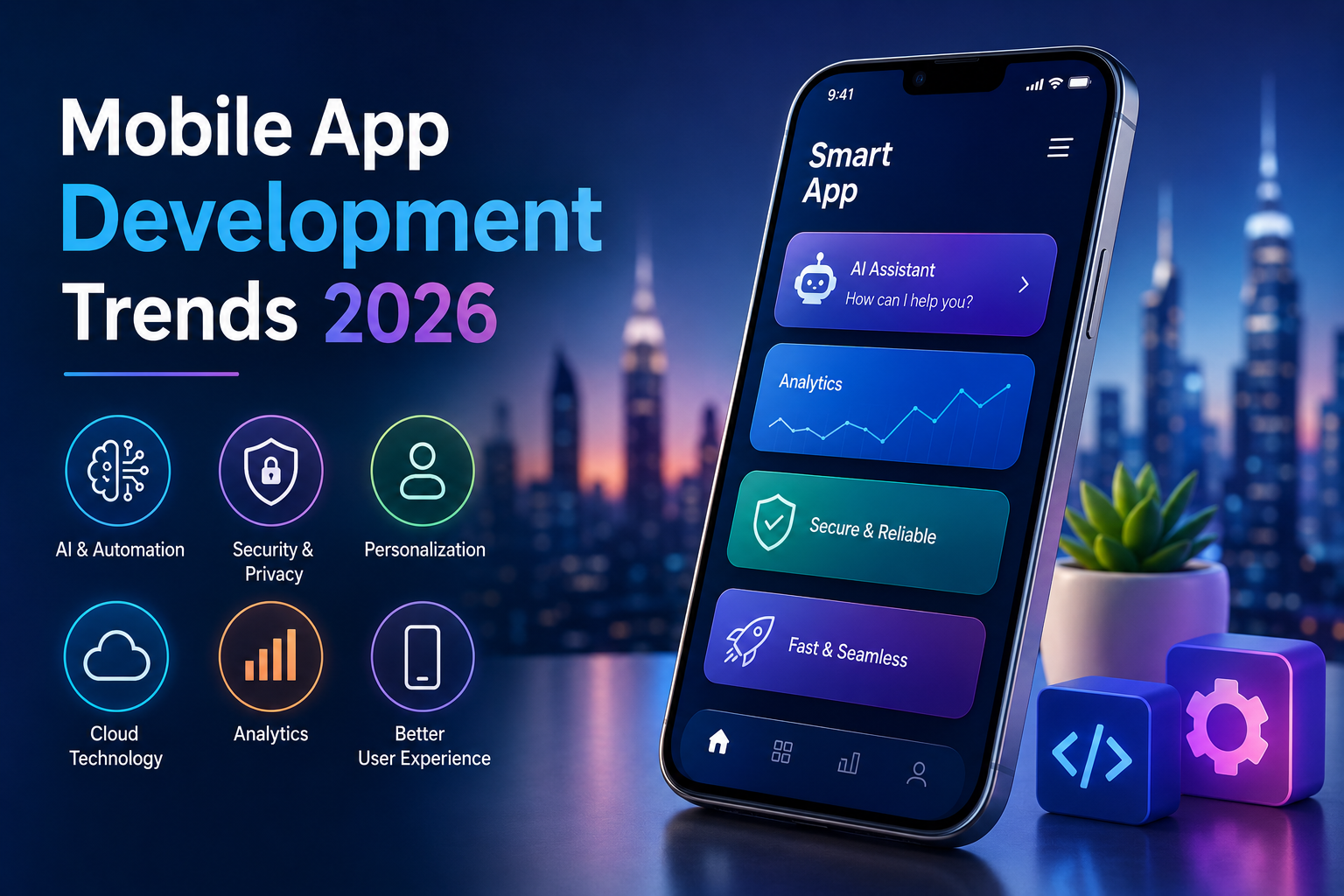
The future of Mobile App Development is not about adding technology for show. Good Mobile App Development starts with a clear purpose. AI can remove repetitive work. Personalisation can make experiences more relevant. Security can strengthen trust. Analytics can show where improvements are needed. Good design can make applications user-friendly, and marketing can get the correct customer base for the applications.
In light of this, companies that are contemplating using apps in the year 2026 should have a good starting point from the problem that their company is facing rather than having a detailed list of features.If all these are integrated together, Mobile App Development could prove to be far more than just a digital asset.
FAQs
1. Why is Mobile App Development significant to business in 2026?
Mobile App Development may offer business a way to reach out to their customers via the digital medium for booking, making and generating sales. The only caveat here would be the ability of the mobile app to solve the customer’s problem.
2. What are the important Mobile App Development trends for 2026?
Some important trends will include practical usage of AI, personalisation, privacy issues, fast UI speeds, accessibility, data analysis, videos and overall more integration with digital marketing.
3. When should a business choose Mobile App Development?
The answer lies in the goal. If the customers would be benefited by repeat access to the business, personalisation of its services, booking, making transactions and having a unique experience, Mobile App Development could be considered.
4. Does Mobile App Development need maintenance?
Yes, because apps require regular security upgrades, speed improvements, updates for maintaining compatibility, bug fixing and occasionally, additional features for enhancement.
5. How should businesses market their mobile app?
Marketing could comprise SEO, PPC marketing, social media marketing, use of videos, website marketing and even communication with current customers. Mobile App Development should go hand-in-hand with acquisition and retention strategy.